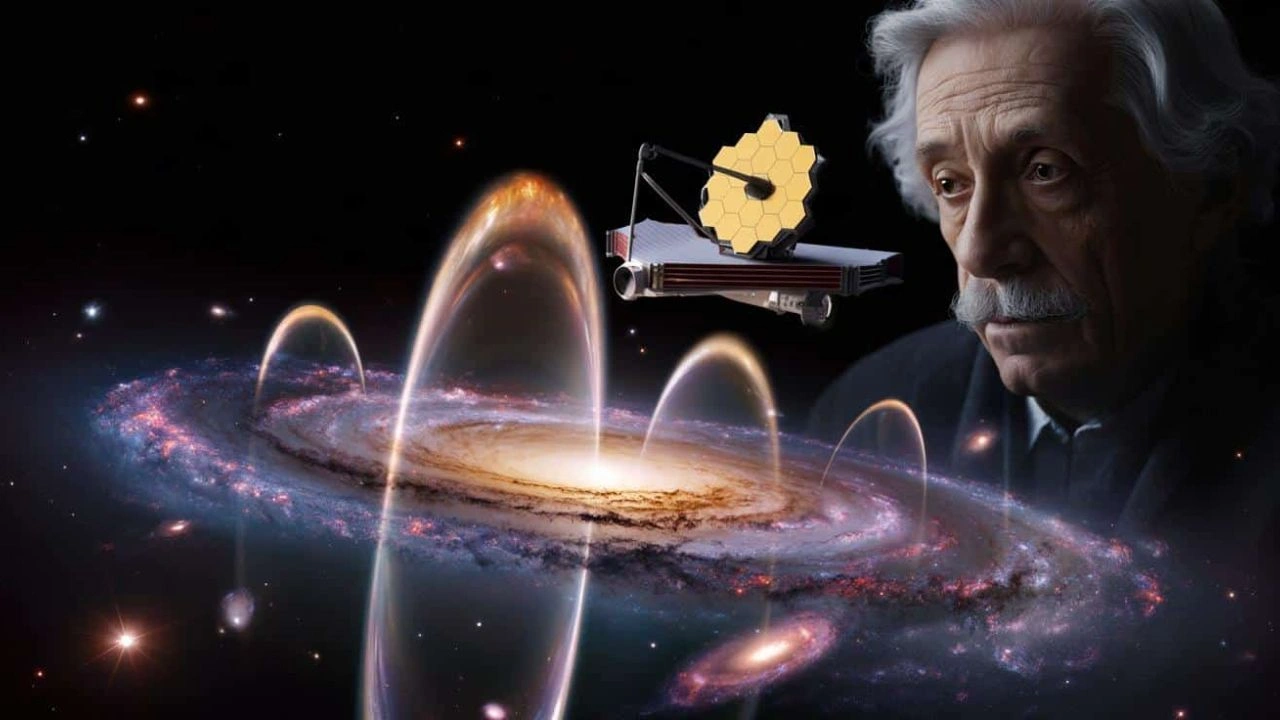
Time bending around galaxies sounds like something straight out of a sci-fi movie, right? But what if I told you it is very real and has just been confirmed by the latest deep-space images from the James Webb Space Telescope? This concept, once a bold prediction by Albert Einstein, is now at the center of an incredible scientific breakthrough that is shaking up how we view the universe.
As it turns out, time bending around galaxies is not just a neat trick of gravity. It is a window into the distant past, revealing galaxies that should not even exist yet based on our current models. These new findings are making astronomers around the world rethink what they thought they knew about the Big Bang and how fast the universe expanded in its early days.
Time Bending Around Galaxies and What It Really Means
At its core, time bending around galaxies is a result of massive objects warping the space and time around them. When light from a distant galaxy travels toward us, and it passes by a galaxy cluster with strong gravity, the light’s path gets curved. This is called gravitational lensing. It is not just bending space, but also stretching time in a way that lets us look further back than ever before.
Thanks to the James Webb Space Telescope, scientists are seeing galaxies that formed shortly after the universe began. And surprisingly, some of them are bigger and more complex than expected. This twist in our timeline could mean that early galaxies formed faster than our current theories suggest, forcing us to rethink the Big Bang model as we know it. If this bending of time continues to reveal such unexpected results, it could lead to a significant shift in our understanding of cosmic history.
Overview Table
| Topic | Description |
| Main Discovery | Time and light bend around galaxies due to gravity |
| Einstein’s Prediction | Theory confirmed by modern deep-space observations |
| Gravitational Lensing | Light from distant galaxies appears distorted |
| Early Galaxy Formation | Some galaxies look too developed for their age |
| Webb Telescope’s Role | Offers the clearest images of deep space yet |
| Cosmic Expansion | New data challenges how fast the universe expanded |
| Big Bang Timeline | May need revision due to advanced early galaxies |
| Scientific Debate | Experts disagree on what the new data means |
| Hubble Constant Conflict | Expansion rate measurements do not match |
| Role of Dark Matter | Plays a key role in bending light through gravity |
Einstein’s crazy idea meets Webb’s brutal clarity
When Einstein first proposed that gravity could bend light by curving the fabric of space and time, it was hard for many to believe. The equations were complex, and the idea felt too strange. But over time, astronomers began seeing the signs. Rings and arcs of light in the sky revealed that massive galaxy clusters really do bend the light coming from behind them.
Now, the James Webb Space Telescope takes this one step further. It is capturing clear images of galaxies that existed not long after the universe came into being. These images show the light from ancient galaxies stretched, duplicated, or distorted as it travels around massive structures. Time bending around galaxies is no longer a theory. It is a daily reality in modern astrophysics and one that is forcing us to look at the Big Bang with fresh eyes.
The shape of galaxies that should not exist
Some of the galaxies that Webb is spotting through gravitational lensing are unexpectedly large and mature. Based on our current understanding, galaxies in the early universe should be small and relatively undeveloped. But the ones we are seeing look like they have already been around for billions of years, even though they formed just a few hundred million years after the Big Bang.
This has left scientists scratching their heads. Could it be that galaxies were forming faster than we thought? Or are our models of cosmic evolution missing key information? This is where time bending around galaxies becomes such a valuable tool. It gives researchers a unique chance to study galaxies as they were long ago, helping them refine their understanding of how the universe grew up.
A community divided by curved light
The excitement around these findings is also causing division among cosmologists. When scientists use gravitational lensing to measure how fast the universe is expanding, they often come up with a number that is different from other methods. This difference is at the center of the so-called Hubble tension, a growing debate over how fast the universe is really growing.
Some researchers believe the issue comes from the models used to interpret lensing data. Others think it might point to deeper problems with our understanding of the universe. Either way, time bending around galaxies is not just confirming Einstein’s vision. It is raising powerful questions that go right to the heart of modern physics.
The method that bends time – and splits the physics community
Gravitational lensing is not just about taking pretty pictures of warped galaxies. Scientists have to build complex models that estimate the mass of galaxy clusters, including dark matter, which cannot be seen directly. Then they simulate how light would behave as it moves through those massive areas.
But here is the challenge. Every research team uses slightly different assumptions in their models. Some assume the dark matter is evenly spread out. Others use different shapes or smoothing techniques. These choices can lead to very different results when trying to calculate how far the light has traveled and how fast the universe is expanding.
Because of this, time bending around galaxies has become both a tool for discovery and a source of controversy. It is helping us look back billions of years, but also making it clear that we still have a lot to learn about the forces shaping our universe.
Two Big Questions in One Ongoing Mystery
- How fast is the universe expanding really?
Time bending data gives expansion rates that often do not line up with other measurements, keeping the debate alive and unresolved. - Is the Big Bang model still complete?
If galaxies formed faster and earlier than predicted, it could mean that key parts of our cosmic origin story need serious revision.
FAQs
What does time bending around galaxies mean in simple terms?
It means that gravity from very large objects like galaxy clusters can bend light from distant galaxies, changing how and where we see them.
How did Einstein predict this would happen?
Einstein’s theory of general relativity suggested that massive objects bend space and time, which would cause light to follow a curved path.
What is the James Webb Telescope showing us?
It is showing clearer images of early galaxies than ever before, some of which are more developed than they should be based on their age.
Why do these observations matter?
Because they may force us to rethink how fast the universe expanded after the Big Bang and how early galaxies really formed.
Can this discovery affect our current physics models?
Yes. If these findings hold up, we may need to adjust key parts of our understanding of the universe’s evolution and structure.