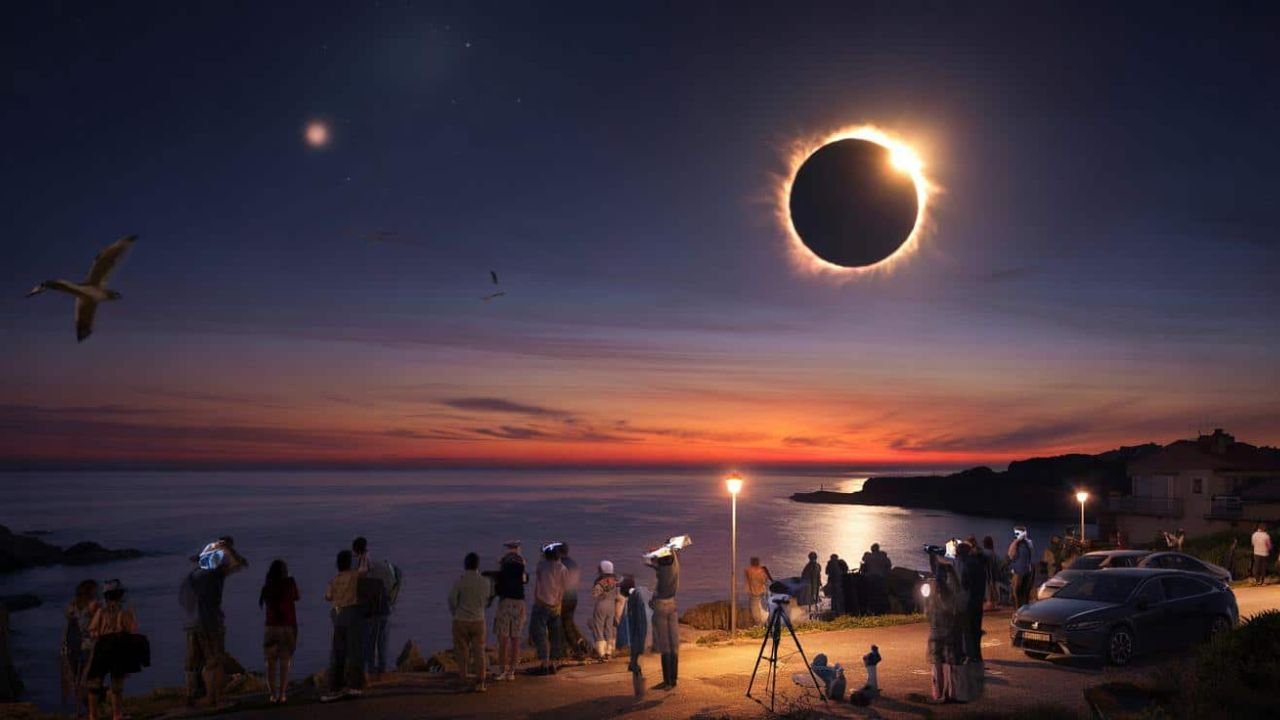
The longest solar eclipse of the century is not just another space event—it is a jaw-dropping, sky-darkening moment you will want to remember for the rest of your life. Set to happen on 25 November 2030, this eclipse will transform daylight into twilight for several extraordinary minutes. Whether you are already passionate about astronomy or just love rare natural wonders, this is one celestial event you should absolutely not miss. In this article, we will break down exactly why the longest solar eclipse of the century is such a big deal. From where to watch it and how to prepare, to what makes this eclipse different from all the others, you will get a full understanding of what to expect. If you are planning to witness this unforgettable event, here is everything you need to know to make the most of it.
Why this eclipse stands out: longest solar eclipse of the century
This is not just any eclipse—it is the longest solar eclipse of the century. That means no other solar eclipse from 2001 to 2100 will last as long in terms of totality. The magic behind it lies in a rare combination of orbital timing and distance. On 25 November 2030, the Moon will be close to Earth, while the Earth is positioned in such a way that the Sun appears smaller in the sky. This allows the Moon to completely block the Sun’s light for a longer period than usual. People within the path of totality will witness midday turn into a surreal version of night. You may see stars, feel a sudden temperature drop, and watch animals react in confusion. It is a powerful, emotional, and deeply human experience that connects us to the rhythms of the universe. If you have never seen a total solar eclipse in person, this is the one to aim for.
Quick Eclipse Overview Table
| Key Detail | Information |
| Official Eclipse Date | 25 November 2030 |
| Type of Eclipse | Total Solar Eclipse |
| Totality Duration | Over 6 minutes in certain areas |
| Countries in Path | Chile, Argentina, parts of southern Africa |
| Eclipse Path Width | Approximately 160 kilometers wide |
| Required Eye Protection | ISO-certified solar eclipse glasses |
| Visual Experience | Sudden twilight, visible corona, possible stars |
| Wildlife Behavior | Birds quiet down, animals show unusual activity |
| Ideal Viewing Conditions | Clear skies, wide-open spaces away from city lights |
| Best Preparation Timeline | At least 6–12 months in advance for travel planning |
The longest eclipse of the century is happening on 25 November 2030
Circle the date on your calendar: 25 November 2030 is when the longest solar eclipse of the century will sweep across specific regions of Earth. Unlike partial eclipses that dim the sky just a little, this total eclipse will plunge parts of the globe into darkness in the middle of the day. The Sun will vanish completely behind the Moon, creating a rare opportunity to witness the corona—an outer layer of the Sun that is only visible during totality. This event is not just about astronomy; it is about the shared experience. Families, tourists, eclipse chasers, and scientists will gather in towns and cities along the eclipse path to feel the strange and beautiful shift as daylight fades. The extended totality means more time to be fully present in the moment, whether you are cheering, crying, or simply staring at the sky in awe.
What allows this eclipse to last so long is pure orbital geometry
There is a fascinating reason why this particular eclipse will last longer than any other this century. It comes down to orbital geometry. The Moon’s elliptical orbit means its distance from Earth changes. On the day of the eclipse, it will be close to perigee, its nearest point to Earth. That makes the Moon appear slightly larger in the sky, which helps it cover the Sun completely. Meanwhile, Earth’s position in its orbit around the Sun means the Sun appears slightly smaller from our perspective. These two factors combine to create a longer eclipse duration. It is a rare alignment that results in a longer shadow, a wider path of totality, and more time for viewers to experience the full glory of the eclipse.
How to actually live this eclipse, not just scroll past it
If you truly want to feel the full power of the longest solar eclipse of the century, you need to be inside the path of totality. This is the narrow strip where the Sun will be fully blocked. Outside this area, you will only get a partial eclipse, which is interesting but nowhere near as breathtaking. To make it happen, start planning early. Use official resources like NASA’s eclipse maps to find out which cities and towns fall within the totality path. Look for places with good weather forecasts and clear skies in November. Book your travel and stay well in advance because accommodations in popular viewing areas will fill up quickly. This is a one-of-a-kind event, and preparation will make all the difference.
There is also the question of how to protect your eyes without killing the magic of the moment
Watching an eclipse without proper protection is extremely dangerous. The Sun’s rays can damage your eyes in seconds if you look directly at it during the partial phases. You must use ISO-certified eclipse glasses that block harmful light. These glasses are specially designed to let you view the Sun safely during all non-total phases. During the brief window of full totality—when the Moon covers the Sun completely—you can take off your glasses and look directly at the spectacle. Just be sure to put them back on immediately as the Sun starts to reappear. If you are watching with children, keep a close eye on them to ensure they are using the glasses correctly at all times.
Let us be honest: nobody really does this every single day
This kind of celestial event is not part of daily life. Most of us live by work deadlines, traffic lights, and screen time. The longest solar eclipse of the century is a reason to pause and remember that we are part of a bigger system. It is like watching the universe perform live, without any special effects or editing. Prepare for it like you would a big event. Bring eclipse glasses for every person in your group. Carry food, drinks, and weather-appropriate clothing. Cell networks might be overloaded, so offline maps and paper directions can be a lifesaver. Whether you are camping, standing in a field, or on a rooftop, the key is to be present.
A rare night at noon… and what it does to us
There is something deeply emotional about seeing the sky go dark in the middle of the day. People who have experienced totality talk about the eerie silence, the chill in the air, and the way nature pauses. Streetlights flicker on, birds go quiet, and everything feels just a little more mysterious. The longest solar eclipse of the century will not just change how the sky looks—it may change how you feel about your place in the universe. For those few minutes of darkness, everything slows down. You will not be thinking about emails or errands. You will be fully absorbed in one of the most powerful natural events a human can witness.
FAQs
How long will the total eclipse last?
The total eclipse will last over six minutes in some locations, making it the longest total eclipse of the century.
Where is the best place to see the eclipse?
The best views will be in areas along the path of totality, especially in parts of Chile, Argentina, and southern Africa.
Can I watch the eclipse without special glasses?
Only during the full totality phase. Before and after, you must use ISO-certified eclipse glasses for eye protection.
Is the temperature really going to drop?
Yes, during totality, temperatures can drop by several degrees due to the sudden loss of sunlight.
Should I travel to see the full eclipse?
If you are outside the path of totality, yes. Traveling gives you the chance to experience the full and unforgettable effect of the eclipse.