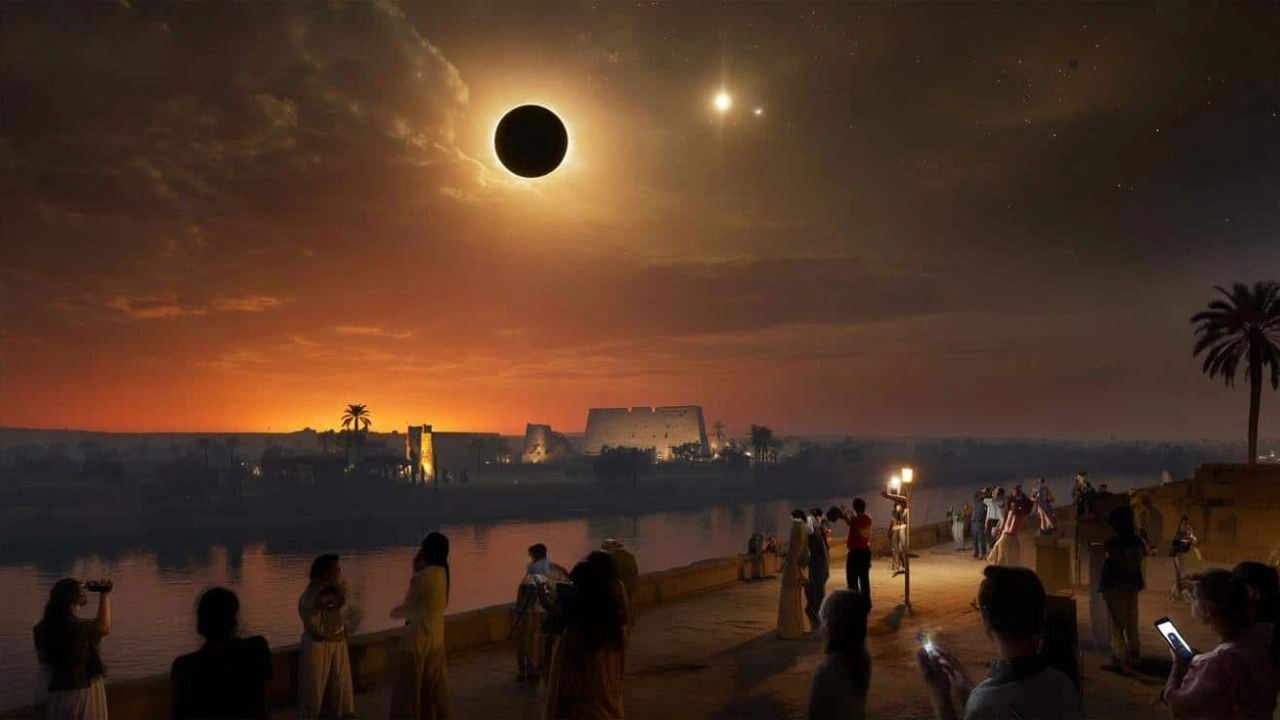
The longest solar eclipse of the century has been officially confirmed, and it is shaping up to be one of the most fascinating astronomical events of our lifetime. This rare cosmic alignment will darken the skies on August 2, 2027, and trust me, if you have never seen a total solar eclipse before, this is the one you should plan for. With up to six minutes of midday darkness, it is expected to be not only the longest of the century but also one of the most captivating visual moments we may ever witness.
What makes the longest solar eclipse so special is more than just its duration. This article breaks down everything you need to know about this unforgettable event. From why it will last so long to where you can view it best, we will explore all the factors that make this eclipse stand out. Whether you are casually curious or seriously planning to travel, you will find everything you need right here.
The Longest Solar Eclipse: Why 2027 is a Must-Watch
So what makes the 2027 eclipse different from others? This is not just about the Sun hiding behind the Moon for a few seconds. The longest solar eclipse in recent memory will deliver a deep and extended period of totality, giving people on the path of the eclipse a full six minutes and 23 seconds of darkness. Most total eclipses last around two to three minutes, so this one is exceptional.
This rare event is possible because of a perfect set of conditions. The Moon will be at its closest point to Earth, making it appear larger than usual, while Earth will be at a point in its orbit where the Sun appears slightly smaller. These two things combined allow the Moon to cover the Sun more completely and for a longer time. Add in the fact that the eclipse path crosses near the equator, where Earth rotates the fastest, and you have the recipe for the longest total eclipse of the 21st century.
Overview Table: Quick Glance at the Eclipse Event
| Key Detail | Description |
| Event Name | Longest Solar Eclipse of the Century |
| Official Date | August 2, 2027 |
| Maximum Duration | 6 minutes and 23 seconds |
| Eclipse Type | Total Solar Eclipse |
| Closest Viewing Points | Luxor and Aswan in Egypt |
| Best Weather Conditions | Southern Egypt in August |
| Moon Position | Near perigee (closer to Earth) |
| Earth Position | Near aphelion (farther from the Sun) |
| Path of Eclipse | From Atlantic Ocean through North Africa to the Indian Ocean |
| Viewing Equipment | ISO-certified solar eclipse glasses and camera filters |
The Longest Solar Eclipse of the Century: Why It Matters
This event is not just a visual treat, it is also a lesson in how the universe works. A solar eclipse of this magnitude requires very precise conditions. For one, the Moon will be very close to Earth, making it look big enough to block the entire Sun. At the same time, Earth will be at a point in its orbit that places it farther from the Sun, which makes the Sun appear smaller in the sky.
These two factors alone are rare. But when you add in the fact that the eclipse path crosses the equator, where the Earth spins the fastest, the Moon’s shadow lingers longer over the same region. That is what gives this eclipse such an unusually long totality. It is a perfect storm of cosmic timing, and it is not going to repeat anytime soon.
Longest solar eclipse of the century: the date is set
Mark your calendars because August 2, 2027, is the big day. This is when parts of the globe will experience a mid-day blackout as the longest solar eclipse makes its way across the sky. Cities like Luxor and Aswan in Egypt will have front-row seats to this cosmic performance.
This is not going to be a fast event. You will have time to take it in, breathe, and even share the moment with others before the light returns. Photographers, scientists, and eclipse lovers from around the world are already planning their trips. For those lucky enough to be in the right place, it will be a surreal experience where day briefly becomes night and the world stands still.
What makes this eclipse so long?
Many people ask why this particular eclipse will last longer than others. It all comes down to orbital mechanics. The Moon will be near its perigee, which is its closest point to Earth. That makes it appear slightly larger in the sky. Meanwhile, Earth will be near aphelion, which means it is farther from the Sun, making the Sun appear slightly smaller.
Because the Moon looks larger and the Sun looks smaller, the Moon can cover the Sun for a longer period. The final piece is location. Since the path of totality moves across areas close to the equator, where the Earth rotates faster, the Moon’s shadow remains over each location for a longer time. These rare conditions combine to give us the longest solar eclipse we will see in our lifetimes.
Where you can experience it best
If you want the best view of the longest solar eclipse, you will need to be in the right place. Southern Egypt is your top choice, especially cities like Luxor and Aswan. These locations are directly in the path of totality and have excellent weather records for early August.
Other areas that will experience the eclipse include parts of Saudi Arabia, Yemen, and the Indian Ocean. While some locations will see a partial eclipse, only those in the narrow path of totality will get the full experience of six-plus minutes of darkness. Planning your viewing location early is crucial, as hotels and tours are expected to fill up quickly.
How to be ready when midday turns to midnight
To make the most of the longest solar eclipse, you need to plan ahead. First, book your travel and accommodation early. Some people reserve spots years in advance. Next, prepare your viewing gear. You must have ISO-certified eclipse glasses for safe viewing.
If you plan to take photos or videos, invest in proper solar filters for your camera equipment. Practice shooting the Moon at night to get a feel for your setup. Also, decide how you want to experience the event. Will you quietly observe it, take photos, or share it with family and friends? Whatever you choose, make sure safety comes first.
What this eclipse quietly says about our place in time
There is something deeply humbling about a total eclipse. It is a reminder that we are part of a larger universe, one that moves with clock-like precision. Scientists have predicted this event down to the exact second, and yet, it still feels magical when the sky goes dark in the middle of the day.
For many, the longest solar eclipse will not just be a visual event, but an emotional one. It may become a treasured memory, something you tell your children or grandchildren about. It is a reminder that even in a fast-paced world, nature still finds ways to stop us in our tracks and make us look up.
FAQs
Where will the longest solar eclipse be visible the longest?
The longest duration will be visible in southern Egypt, especially near Luxor and Aswan, where totality will last over six minutes.
Is it safe to look at the eclipse without glasses?
Only during the brief moment of full totality. At all other times, certified eclipse glasses must be worn to avoid eye damage.
What happens if the weather is bad during the eclipse?
Clouds may block the Sun visually, but you will still experience the temperature drop and other atmospheric changes. Choose locations known for clear skies.
Can a smartphone capture the eclipse?
Smartphones can capture general lighting changes and crowd reactions. For close-up shots, a DSLR camera with a solar filter is best.
When is the next eclipse this long?
There will be other eclipses this century, but none are expected to match the length of totality of the 2027 eclipse. This is a once-in-a-lifetime opportunity.