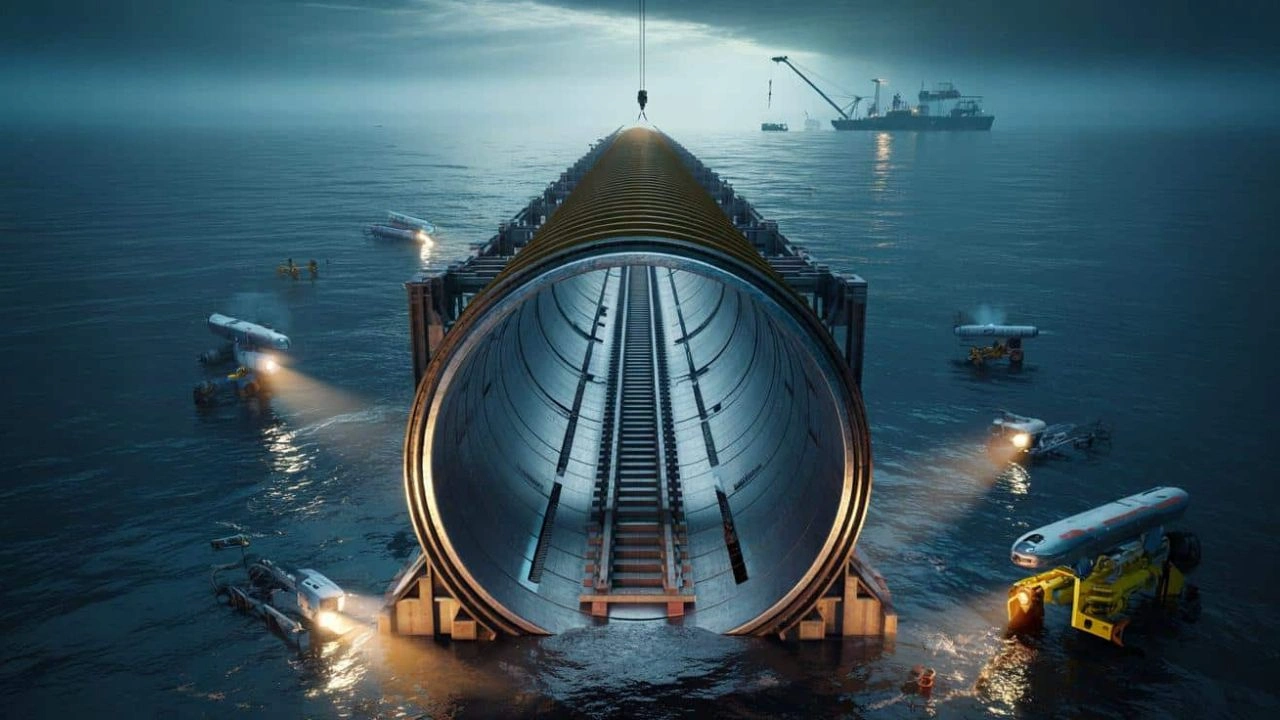
The underwater rail tunnel is finally moving from concept to construction. For years, it sounded like something pulled straight from science fiction. But now, engineers have confirmed the start of construction on what might become the most groundbreaking infrastructure project of the century. If all goes as planned, people could one day board a train in one part of the world and arrive on another continent in just a few hours.
This massive underwater rail tunnel is not just about speed. It is about revolutionizing global travel and trade. As countries invest in new transportation methods, this project stands out for its bold vision and potential to reshape how we connect across oceans. In this article, you will get a clear picture of how this project is being built, where the work is happening right now, and why it might matter more than you think.
Underwater Rail Tunnel: Construction Confirmed and Underway
Let us get straight to the point. Yes, the underwater rail tunnel is under construction. This is not just early planning or government talk. Real work is happening along coastlines and under the sea. Crews are building tunnel modules, setting anchors on the ocean floor, and using advanced technology like deep-sea drones to map and test the route. The tunnel uses a hybrid approach. On land and near shores, workers are boring traditional tunnels. Farther out, giant floating tubes will run deep beneath the water’s surface, supported by anchors and tension cables. These pressurized tubes will protect high-speed trains from ocean pressure, weather, and marine traffic. It is a complicated, expensive, and daring project. But the progress being made today shows this is more than a dream. It is becoming real, one tunnel section at a time.
Overview Table
| Feature | Description |
| Project Name | Underwater Rail Tunnel |
| Construction Status | Active in coastal and offshore regions |
| Structure Type | Bored tunnels near coastlines, submerged floating tubes in deep sea |
| Travel Time Estimate | 3 to 5 hours between continents |
| Target Depth | 50 to 150 meters below the ocean surface |
| Energy Source | Powered by offshore wind and wave energy |
| Safety Features | Redundant air supply, emergency exits, pressure shells |
| Environmental Approach | Routes avoid marine life zones, use eco-friendly building techniques |
| Countries Involved | Collaboration between nations across Atlantic and Pacific regions |
| Planned Operational Timeline | Limited operations by 2040s, full service later in the century |
Engineering the World’s First Deep-Sea High-Speed Train Route
When you hear “high-speed train under the ocean,” it sounds like something from a movie. But this time, it is real. The tunnel is being designed to run beneath some of the most unpredictable parts of the ocean. That means engineers are taking every possible precaution. The trains will move inside pressure-controlled tubes, similar to vacuum environments, reducing friction and allowing speeds of up to 800 km/h. These tubes are being built to float, supported by secure anchors and constantly monitored for movement or stress. Every train cabin will be equipped with advanced communication systems, air filtration, and real-time safety monitoring. This is not just a tunnel—it is a full system that combines transportation, engineering, and environmental care all in one. And what makes it more impressive is the fact that every piece is being made to last for decades in one of the harshest environments on Earth.
The Deep-Sea Route That Changes Everything
Imagine leaving a train station in North America and arriving in Europe without stepping on a plane. The underwater rail tunnel is designed to make that possible. It aims to change the way people travel long distances. Instead of dealing with airport lines and jet lag, passengers could travel in quiet, smooth, high-speed trains deep below the ocean. These trains are built for comfort and speed. They would offer the same check-in and boarding experience as an airport, but with fewer delays and more reliability. Plus, because they travel in stable environments, you avoid turbulence or weather-related disruptions. Not to mention, the environmental footprint is much smaller than aviation.
Real Work Already in Motion
Some people still think this is just a future idea, but the work is already happening. Right now, engineers are preparing tunnel parts at dockyards. Giant segments of steel tubes are being assembled and tested on land before they are placed in the water. Robotic systems are drilling anchor points into the seabed. In shallow water, test tunnels are being built and tested for pressure, vibration, and durability. One recent test showed that a tunnel module had to be reinforced after it floated higher than expected. These lessons are shaping the final design. Everything is being done with precision and patience. It may not be flashy, but it is real, and it is happening now.
Design Challenges in Deep Waters
Building anything under the ocean is incredibly hard. The underwater rail tunnel faces constant pressure changes, shifting seafloor conditions, and the risk of natural disasters like earthquakes or underwater landslides. That is why the design must be both flexible and strong. Engineers have created modular segments that can be replaced or upgraded over time. Each tunnel section includes backup power, lighting, and oxygen systems. Emergency exits and escape pods are built into every few kilometers. The trains themselves will be monitored at all times, with live updates on cabin pressure, speed, and location. Nothing is being left to chance. Every decision is focused on one goal—keeping passengers and cargo safe, no matter what.
What This Means for Global Travel and Trade
There is a lot of excitement about what this tunnel can do for everyday travel, but the impact on global trade might be even bigger. Fast cargo trains could move goods across continents without needing ports or long-haul flights. That means fresher products, faster delivery times, and less fuel burned. Countries working together on this project are also building new partnerships. Sharing technology, data, and maintenance responsibilities will strengthen global cooperation. And because the tunnel is expected to run on renewable ocean energy, it could be one of the greenest transport systems ever built. It is not just about getting there faster—it is about doing it better, for the planet and for the people.
Two Key Features of the Project
• Hybrid Construction Design
The underwater rail tunnel uses a mix of bored coastal tunnels and submerged floating tubes. This combination helps handle changes in terrain, sea pressure, and reduces construction risks.
• Advanced Safety Systems
Each segment includes pressure-resistant layers, emergency exits, and independent life-support systems. Safety checks run constantly to protect both passengers and cargo.
A Project That Forces Us to Ask What “Far Away” Really Means
This tunnel is making people rethink distance. When a train can take you from one continent to another in a few hours, the world feels a lot smaller. Suddenly, living and working in different parts of the world becomes easier. Families separated by oceans could be connected in ways never imagined before. It is not about replacing planes or ships, but about giving people another choice. A cleaner, quieter, faster one. The construction crews working today might be building the backbone of tomorrow’s world—one where the ocean is no longer a barrier, but a path.
FAQs
Is the underwater rail tunnel actually being built now?
Yes, construction is active in several areas, including shipyards and seabed drilling locations.
How fast will the trains be able to travel?
Trains in the tunnel could reach speeds between 500 and 800 kilometers per hour due to low-pressure environments.
What safety measures are in place for passengers?
Each tunnel section includes backup air systems, emergency exits, and strong pressure control features.
Will the tunnel damage the ocean environment?
No, the routes are chosen to avoid sensitive marine zones, and eco-friendly materials are being used during construction.
When will the public be able to use the tunnel?
Test routes may open by the 2040s, with full public access expected later in the century when all segments are complete.